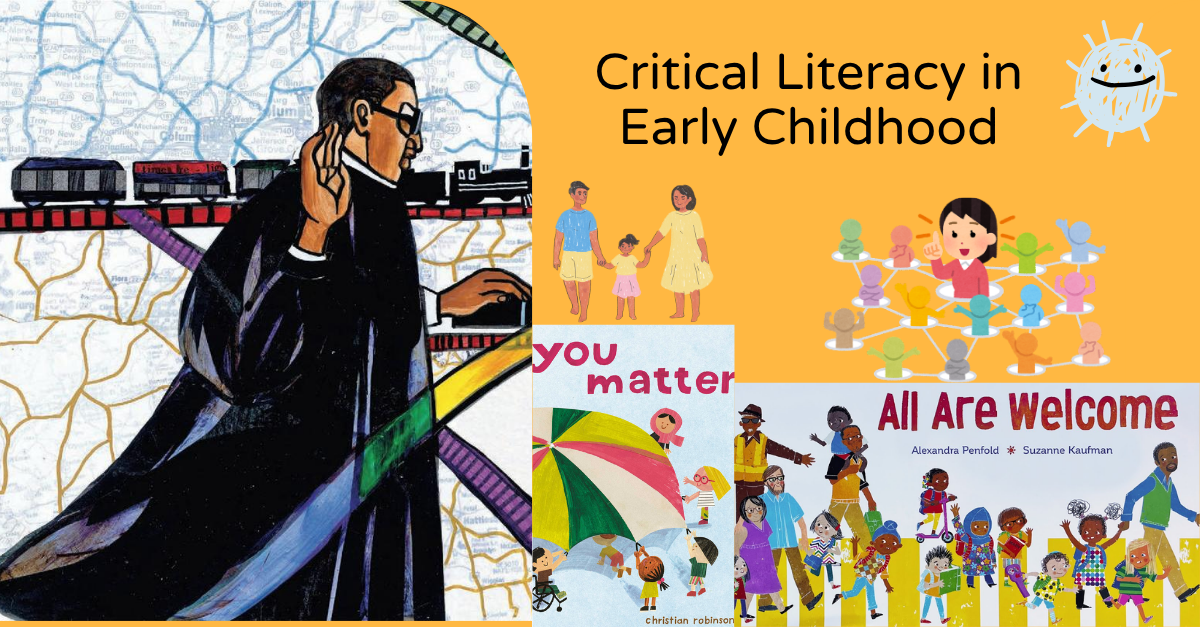
Empowering minds through critical literacy
Welcome to critical literacy, where we believe in the power of understanding beyond the surface. Discover our approach to fostering deep thought and informed perspectives. Join us in shaping a more critically engaged world.
What is Critical Literacy?
- The ability to think deeply about stories, images, and messages
- Encourages children to ask questions like “Why?” and “Is this fair?”
- Helps children understand that texts can have hidden meanings or messages
- Supports exploration of fairness, bias, and social issues.
- Goes beyond reading words — it’s about understanding and questioning the world


Why is Critical Literacy Important?
- Helps children question and analyse information instead of just accepting it
- Supports understanding of right vs wrong, fair vs unfair
- Builds skills to recognise bias and stereotypes
- Encourages respect for different perspectives and cultures
- Helps children develop confidence to express their ideas and opinions
- Promotes awareness of social issues like:
- Diversity
- Bullying
- Disability
- Poverty
- Prejudice
Our Approach
Growing Thoughtful and Curious Thinkers
Educators at our centre strongly believe that young children think deeply and meaningfully. We see children as learners who can recognise words on a page, as well as interpret, discuss and understand the messages, ideas and viewpoints they come across in their daily lives.
During our everyday practices, we use a range of books, visuals and real-life scenarios that portray diverse cultures, identities and family dynamics. Throughout shared reading and discussions, educators prompt children to ask questions like “What do you notice?”, “Is this fair?” or “Do you think everyone is represented?” Children are listened to and encouraged to share their ideas and perspectives, while also listening to those around them and feeling comfortable to share their own.
We believe when children have the opportunity to ask questions and explore multiple perspectives they become better thinkers, more empathetic and understand the world around them is diverse. Children also feel respected and included when they can relate to the content they are learning.
.
Strategies for parent to use at home
Parents can connect learning to daily life by talking about everyday situations with their children. For example, they can discuss how people behave in different situations and ask questions like “Is this the right behaviour?”, helping children think about different perspectives and meanings.
Parents can support their children’s critical literacy development through everyday reading activities at home. For example, when reading together, they can ask open-ended questions such as “Why did this happen?” or “What do you think the ending will be?”. This helps children think about different perspectives, and share their own opinions.
Parents can balance reading books and using digital devices by choosing age-appropriate and meaningful content and limiting screen time. This helps ensure that digital media supports children’s learning and thinking, rather than just entertainment.


Building Critical Literacy Through Family–Educator Partnerships
Educators at our centre strongly believe that

"Families can work with educators by sharing children’s interests from home, including books, songs, apps and texts from popular culture, as well as everyday items such as cereal boxes, fruit stickers or birthday cards in their home languages. Bringing these familiar and popular culture-based texts strengthens connections between home and educational settings, while supporting children to engage in critical literacy from an early age"
Eva Green

"Families are encouraged to review learning resources and share their stories, experiences, and community knowledge. This helps educators identify stereotypical or biased representations to ensure cultural safety, while also providing opportunities for children to connect with diverse perspectives, learning to question dominant discourses of power and challenge cultural assumptions"
Janice Smith

"Families and educators can work together to support critical literacy by sharing books, including bilingual and culturally diverse texts. Families can ask open-ended questions at home to encourage thinking. Educators can invite families to share stories and experiences, helping children explore different perspectives and build stronger critical thinking skills"
Evelyn Harris
Helpful Resources for Families
Which helps children learn about inclusion, friendship, and understanding in a simple and friendly way

Black Is a Rainbow Color
Black Is a Rainbow Color is a powerful anthem that celebrates all things Black, the colorful and the cultural

You Matter
Through vibrant illustrations and simple text, it explores themes of interconnection, empathy, and self-worth, reminding everyone—from the small to the, and those who feel alone—that they matter

All Are Welcome and Whoever You Are
Book emphasized that regardless of background, appearance, or beliefs, everyone belongs, is valued, and is welcome, fostering community and kindness

Play School: All Together
Exploring the value of kindness and supporting others in a developmentally appropriate way. .Ensuring everyone is included in play and community, based on principles of respect and empathy.

Our Perspective
In our website, we use both written text and visuals to introduce ideas about critical literacy in a way that is clear and understandable for families. The written part uses simple language, short paragraphs and clear headings so that parents and carers can follow the ideas easily. Meanwhile, the images are selected to match the main ideas of the blog. For instance , images of children reading with parents, sharing stories, or interacting with books that reflect different cultures and family backgrounds can help families better understand what critical literacy looks like in daily experiences. These images are not just included to make the blog look better. However, they are added to reinforce the written message and make the message more effective. Through combining texts and pictures, the blog becomes more interesting, clearer, and more useful for families.
Create Your Own Website With Webador